In corporate film and industrial tour projects, the primary goal is often to showcase facilities, processes, products, company culture, safety standards, and scale in a professional, engaging, and credible way. These videos are used for marketing, investor relations, employee training, recruitment, or client pitches.
Mainstream professional equipment typically forms the core kit:
Cinema or mirrorless hybrid cameras (e.g., Sony FX6/FX9, Blackmagic Pocket Cinema Camera 6K, Canon EOS R5 C, or ARRI Alexa Mini alternatives) for high dynamic range, cinematic color science, shallow depth of field, and clean low-light performance.
Lenses (primes, zooms), gimbals/stabilizers, dollies, tripods, lighting kits (LED panels, softboxes), professional audio (shotgun mics, lavaliers, mixers), drones for aerial shots, and editing/post-production tools.
These deliver polished, broadcast-quality results with controlled framing, interviews, wide establishing shots, and smooth motion.
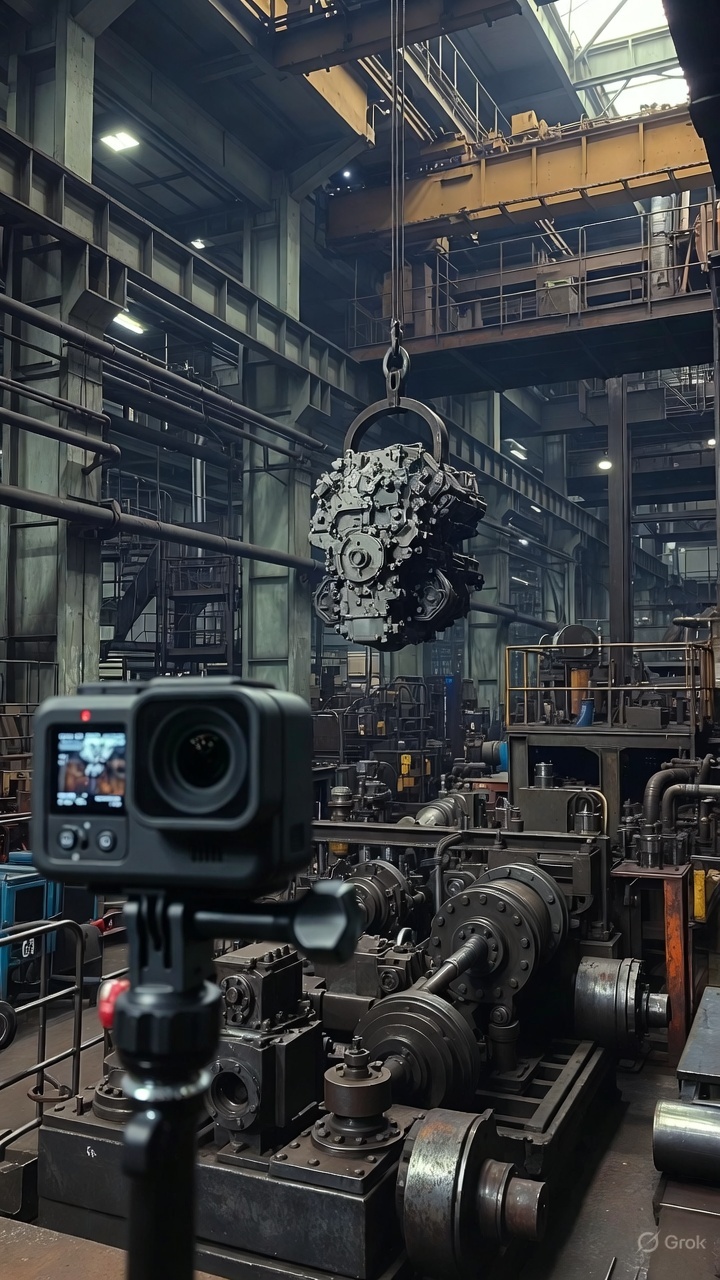
Action cameras (like GoPro Hero series, Insta360 models, or DJI Osmo Action) play a complementary but increasingly important role, especially in industrial and factory tour settings. They aren’t usually the main camera but add unique value that traditional gear often can’t match easily.
Key Advantages of Action Cameras in These Projects
Access to Tight, Hazardous, or Inaccessible Spaces
Industrial environments include confined areas (machinery interiors, assembly lines, pipelines, high bays, clean rooms, or moving conveyor belts). Action cameras are tiny, rugged, waterproof/dustproof, and can be mounted almost anywhere (magnetic mounts, clamps, helmet/chest rigs, suction cups, or embedded on equipment). This allows immersive “inside the action” perspectives that large cameras can’t safely or practically reach.
Need stunning corporate videos, animations, or factory walkthroughs that stand out? We’re ready when you are – email info@cutsncamera.in or call +91 7042111335 right now!
Dynamic Point-of-View (POV) and Immersive Shots
They excel at capturing first-person or embedded views—e.g., following a product through manufacturing, worker-eye-level process walkthroughs, or close-up machinery operation. This creates engaging, energetic footage that makes tours feel more alive and helps viewers understand scale/complexity intuitively.
Built-in Stabilization and Wide-Angle Lenses
HyperSmooth or similar stabilization handles vibrations from heavy machinery or handheld walking tours extremely well. Ultra-wide lenses capture expansive factory floors or tight spaces without needing complex rigging.
Durability in Harsh Conditions
Factories often have dust, vibrations, temperature extremes, moisture, or risk of impacts. Action cameras are built for abuse and keep running where delicate cinema gear might fail or require protective housings.
Multi-Camera Coverage and B-Roll Efficiency
You can deploy several action cameras simultaneously (e.g., one on a forklift, one inside a machine, one on a safety helmet) for rich B-roll that supplements main footage. They’re affordable enough to use multiple units, and footage integrates well in post (especially when color-graded to match).
Creative Flexibility for Modern Storytelling
In corporate videos, dynamic movement and energy boost viewer engagement. Action cameras help avoid static, talking-head-heavy films by adding motion and unique angles, similar to how gimbals/drones add polish.
When Action Cameras Shine Most in Corporate/Industrial Projects
Factory walkthroughs or process tours (capturing live production without stopping lines).
Safety/training videos (POV of hazardous tasks).
Product demos in real environments.
Behind-the-scenes or “day in the life” segments.
Supplementing drone/aerial shots with ground-level intensity.
Limitations and Best Practice
Action cameras aren’t ideal as primary cameras for interviews, executive talking heads, or scenes needing cinematic bokeh/low-light mastery—their smaller sensors and wide lenses limit those. They produce fisheye distortion (correctable in post) and less dynamic range than pro cameras.
Best workflow: Use mainstream cinema/hybrid cameras for hero shots, interviews, and controlled scenes + action cameras for specialty/POV/impossible angles. Blend in editing for a dynamic, professional final product.
In summary, action cameras aren’t replacing mainstream equipment in corporate and industrial video production—they enhance it significantly by enabling perspectives, safety, and energy that make tours and films more compelling and authentic. Many pro productions now treat them as essential secondary tools rather than niche gadgets.
Pan-India video production with Delhi NCR gurugram manesar creativity – your vision, our craft. Contact us: info@cutsncamera.in | Phone: +91 7042111335